FRIDA is our AI-native delivery system transforming the way we work on digital products. In software engineering, FRIDA ASE can provide the platform and orchestration layer for moving beyond a linear, AI-assisted process to an agentic operating model that supports more parallel work in the enterprise.
FRIDA ASE orchestrates teams, agents, architecture standards, engineering tools, and quality controls. Agents tackle specific assignments inside managed sessions with the context, controlled access, and tools they need. Meanwhile, teams use the Product Workspace to track the work: what was asked for, what activity is tied to it, and how it is progressing.
FRIDA ASE highlights:

Specification-driven development across the lifecycle

HITL governance & review with traceable, auditable agent-generated artifacts

Enterprise memory for shared context and continuity

Feature-level delivery metrics & AI usage visibility

Security & architecture controls built into the flow

Orchestration across your approved models and engineering tools
Context fragmentation
Architecture consistency
Security and compliance
Quality and reliability
Accountability and traceability
How FRIDA ASE enables controlled delegation to agents
FRIDA ASE gives agents managed sessions to execute defined work, access to the tools they need, and the right context and controls around the assignment. People can then inspect the output and evidence before anything moves forward.
- 1 Business objective
- 2 Specification
- 3 Context and standards
- 4 Agentic execution
- 5 Testing and controls
- 6 Human review
- 7 Delivery evidence
Delegate more than coding
We’ve extended specification-driven development beyond coding into product, implementation, testing, security, and other work that can be clearly assigned.
Give each agent only what it needs
A testing agent needs the behavior it must verify and the enterprise memory necessary to execute, not every document behind the requirement. Less irrelevant context means less to sort through or misinterpret.
Review agent outputs against stronger criteria
Engineers still make the call. When an AI task can have more than one valid answer, the FRIDA ASE harness supports evals engineering to check whether the result falls within an acceptable range, alongside tests and the definition of done.
Work spreads out. FRIDA ASE keeps the original ask in view
One feature can turn into specs, tickets, code, agent sessions, tests, security checks, and reviews. Each system knows its piece. FRIDA ASE keeps every agentic assignment connected to the business objective, feature specification, and definition of done.

Give the change a home
Every feature or fix gets a central card in the Product Workspace. It ties the initial request to its specs, agent sessions, evidence, and dependencies, while detailed tasks and code stay in the systems that own them.
Agents know what their piece is for
Each agent works strictly from the specific context relevant to its assignment, but its session remains permanently anchored to the broader feature it is meant to move forward.
Review the part against the whole
Good code or a passing test does not automatically mean the feature is right. Reviewers can easily judge an agent's specific output against what it was actually supposed to contribute to the product.
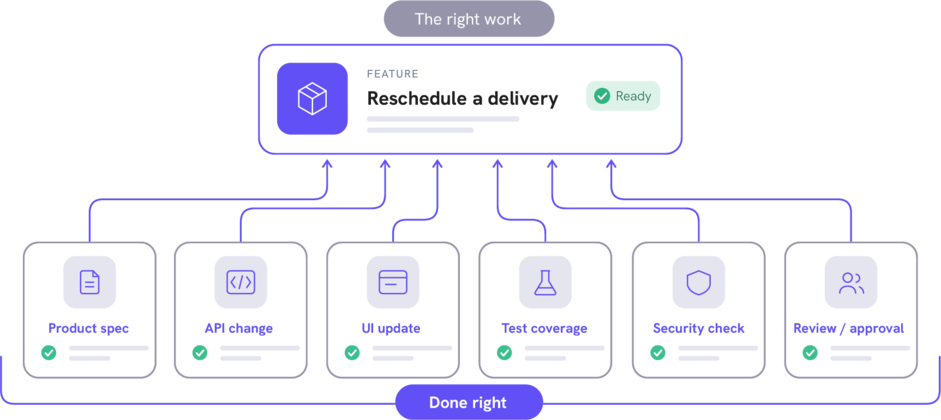
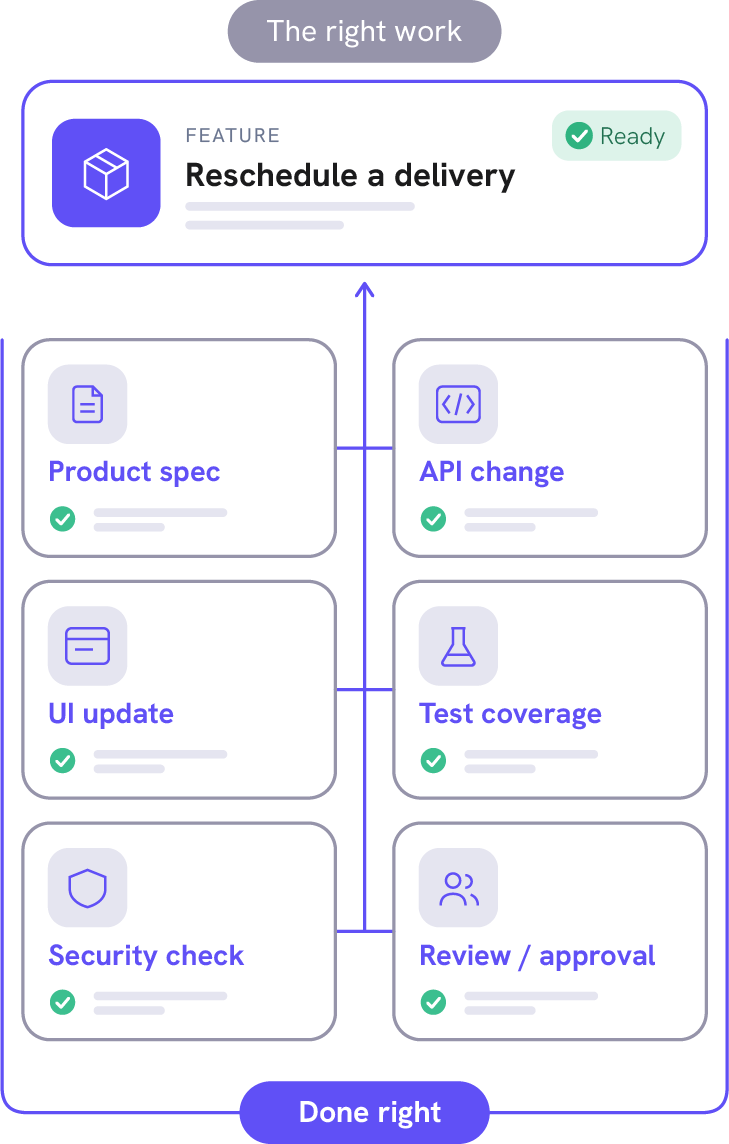
FRIDA ASE ensures every piece is done right and that it all adds up to the right work for the product.
Governance by design
As agents take on more of the work, governance has to keep up. FRIDA ASE pulls back the curtain on the lifecycle so teams can follow work in motion, inspect what comes back, see what it took to get there, and step in before issues grow.
- Governance
- Security
- Traceability
- Observability
- Cost visibility
- Human decision gates
Trace the work
- Feature
- Specification
- Agent/Session
- Current state
Inspect the evidence
- Outputs
- Tests
- Quality results
- Reviews
- Approvals
Control usage and economics
- Models
- Tokens
- Retries
- Usage
- Cost
Know when to step in
- Bottlenecks
- Stalled work
- Quality risks
- DORA & flow metrics
How the delivery setup comes together
FRIDA ASE can fit around the engineering environment, operating model, and policies and standards already in place. Smart Pods are the teams doing the work, combining engineers with specialized agents across FRIDA ASE, client-selected technologies, or a hybrid setup.
Where the work happens
FRIDA ASE
- Product context
- Managed agent execution
- Orchestration & controls
- Reviews & evidence
- Observability & enterprise controls
Connected engineering systems
- Planning
- Repositories
- CI/CD
- Testing & quality
- Security
- Release
Examples of flexibility
Specs can start inside or outside FRIDA ASE. Client knowledge can stay client-controlled. Approved AI environments, client agentic harnesses, and specialized agents can remain part of the setup.
How responsibility is shared
Softtek-led
A Softtek Smart Pod runs more of the engineering flow, with your team involved at key decisions.
Shared engineering
Softtek and client specialists divide the work, technical decisions, review, and approval.
Client-controlled
Keep more definition, specifications, or context in your environment and hand off the agreed work.
How is agentic software engineering different from AI-assisted development?
AI-assisted development typically helps an engineer perform individual tasks. Agentic software engineering delegates defined assignments to agents that can carry out multiple steps using approved tools and context. With FRIDA, those assignments stay connected to feature specifications, managed sessions, review evidence, and human decisions across the software lifecycle.
Is FRIDA ASE a platform we buy or a service Softtek delivers?
Our Smart Pod teams can work with FRIDA, operate entirely within your approved agentic environment, or use a hybrid setup. When FRIDA is used, it adapts to your engineering environment, operating model, and development and architecture standards. The agents, tools, and integrations used are agreed for the engagement.
How does FRIDA ASE handle our code and business data?
Agent context and access are scoped to the assignment. Your team can keep broader knowledge in its own environment and provide the specifications and information needed for the agreed work. Client context grounds AI execution at runtime; it is not used to train or fine-tune foundation models. Approved environments and data-handling requirements are defined for the engagement.
Who reviews agent-generated software and approves releases?
Engineers review agent outputs against specifications, architecture standards, test results, security requirements, and expected product behavior. Softtek and client teams share these responsibilities according to the delivery arrangement. Release authorization remains with the designated people under the agreed approval process. Agent execution does not replace accountability for the software.
What do we need in place to start with FRIDA ASE?
You do not need to rebuild your engineering environment first. A good starting point is a bounded feature, fix, integration, or other piece of work with a clear definition of what “done” looks like. FRIDA ASE can then work with the relevant code, context, approved tools, and environments already in place, while giving agents managed execution and teams a way to review the work and make key decisions. If documentation, tests, or other foundations are thin, those gaps can be addressed as part of getting the work ready for delegation.
How should we measure the results of FRIDA ASE?
Compare time to accepted features, defects and rework, and total delivery cost against a baseline for comparable work. FRIDA ASE’s feature- and session-level records help teams investigate progress, delays, agent activity, and AI usage alongside engineering and financial data. Token consumption alone does not represent total delivery cost or prove return on investment.